Every interaction someone has with your brand shapes how they see you. A social ad. A pricing page. A push notification. A support chat. These moments add up.
If you want to improve retention, increase conversions, and build loyalty, you need to understand how those moments connect. That’s where customer journey mapping comes in.
Customer journey mapping helps you see your brand the way your customers do. And when you can see what they see, you can fix what’s broken, strengthen what works, and create experiences people actually want to come back to.
What Is a Customer Journey Map?
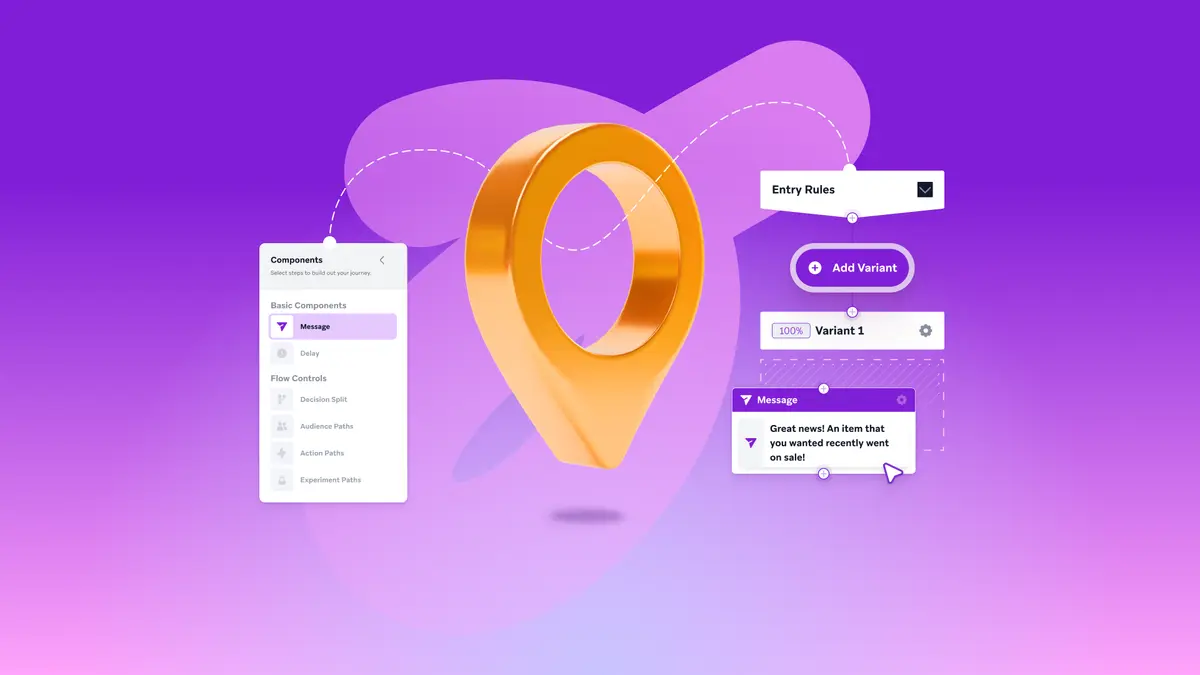
A customer journey map is a structured, visual way to track how someone interacts with your brand over time.
It outlines:
- Where customers first discover you
- How they explore your product or service
- What convinces them to act
- What keeps them engaged
- What causes them to drift away
But it’s not just about tracking clicks. A strong journey map captures what customers are thinking, feeling, and trying to accomplish at each stage.
Instead of focusing only on business goals, it centers on the human experience.
Why Customer Journey Mapping Matters
Without a clear view of the journey, teams often optimize in isolation. Marketing improves ad performance. Product tweaks onboarding. Support handles tickets. But no one sees the full picture.
Journey mapping connects the dots.
Here’s what it helps you do:
Spot friction early
Maybe onboarding feels overwhelming, your pricing page creates doubt or maybe emails arrive at the wrong time. A journey map makes weak points visible before they turn into churn.
Create connected experiences
Customers don’t think in channels. They move from mobile to desktop to email to app without hesitation. Mapping ensures each touchpoint feels consistent and intentional.
Align teams
When marketing, product, CRM, and CX teams share the same view of the customer experience, decisions become clearer. Everyone knows where the journey needs improvement.
Personalize more intelligently
If you understand where someone is in their journey, you can tailor messaging accordingly. A new user needs guidance. A loyal customer needs recognition. A lapsing user needs a reason to return.
Customer Journey Map vs. Marketing Funnel
The marketing funnel and the customer journey map often get mixed up, but they serve different purposes.
The funnel focuses on conversion stages from the brand’s perspective: awareness, interest, desire, action. It’s linear and goal-driven.
A journey map looks at the same progression from the customer’s perspective. It asks:
- What problem are they trying to solve?
- What emotions are influencing their decisions?
- Where do they hesitate?
- When do they experience real value?
The funnel measures movement. The journey explains why that movement happens.
When you combine both, you get a smarter strategy. The funnel shows performance. The journey reveals experience.
The Core Stages of the Customer Journey
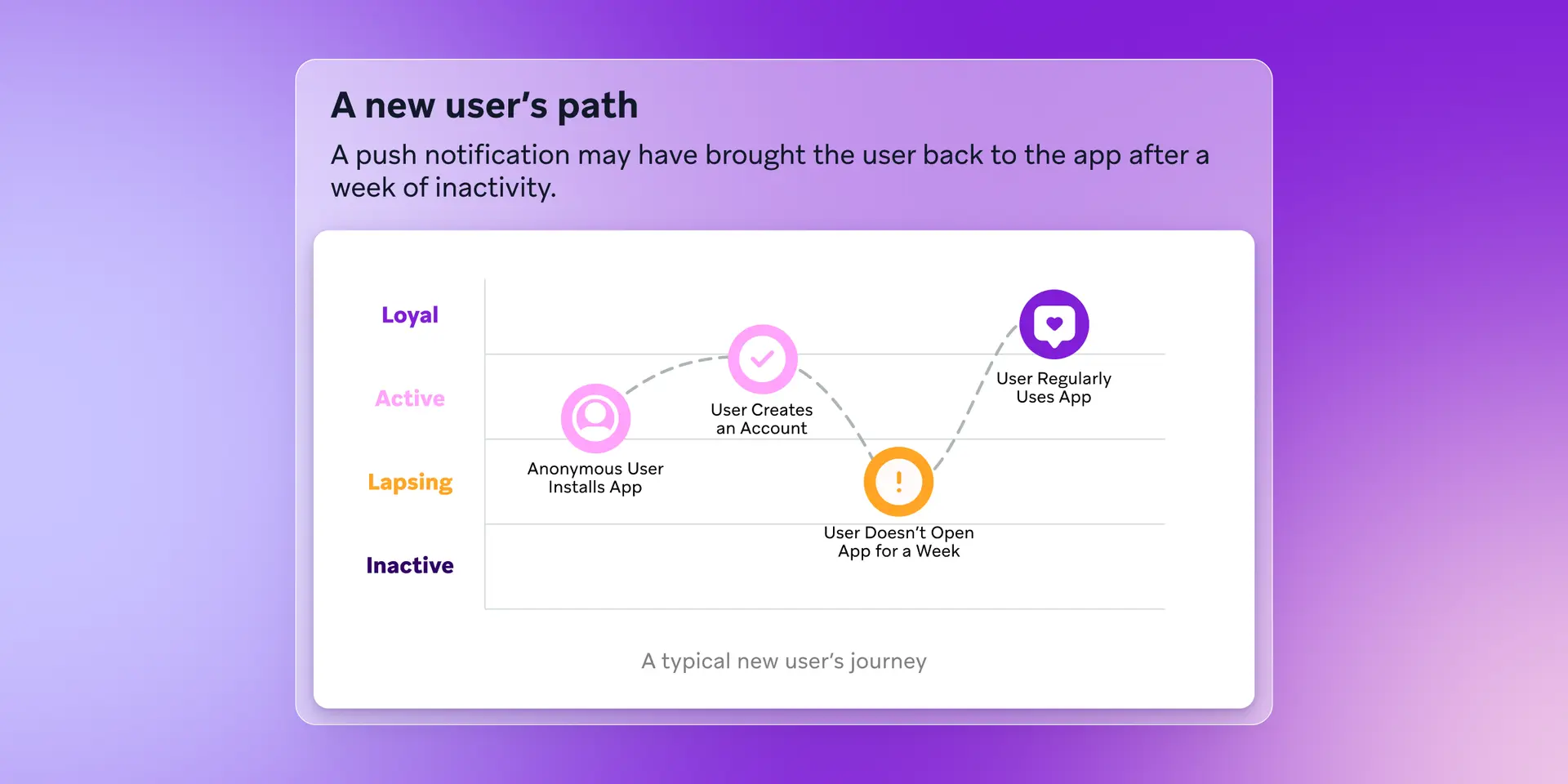
While terminology varies by company, most journeys follow four broad phases.
1. Active
These customers regularly interact with your brand. They open emails, browse your site, use your app, or visit your store.
2. Loyal
They go beyond engagement. They purchase consistently, renew subscriptions, and recommend you to others. They’re invested.
3. Lapsing
Engagement starts to decline. Email open rates drop. App sessions slow down. This is a critical intervention point.
4. Inactive
They’ve disengaged completely. But this isn’t necessarily the end. With thoughtful reactivation campaigns, some can return.
Understanding these phases helps you tailor messaging instead of treating all customers the same.
Different Types of Customer Journey Maps
Not all journey maps look the same. The format depends on what you’re trying to solve.
Touchpoint Maps
These track every interaction across channels. They’re helpful when experiences span web, mobile, in-store, and support. You can quickly identify inconsistencies or duplicated efforts.
Goal-Based Maps
These focus on a specific outcome, like completing a purchase or renewing a subscription. They’re useful when conversion paths are complex or high-stakes.
Day-in-the-Life Maps
These step outside your brand and explore a customer’s broader routine. What’s competing for their attention? When does your product fit naturally into their day? This format is powerful when habits and context matter.
Service Blueprints
These go a layer deeper. In addition to mapping the customer experience, they outline the internal systems and teams supporting each touchpoint. If customers experience delays or confusion, this format helps identify operational causes.
Turning Insight Into Action
A journey map shouldn’t sit in a slide deck. It should guide execution.
Here’s a practical approach:
- Define clear lifecycle stages. Acquisition, activation, engagement, monetization. Then identify key moments where customers experience value for the first time.
- Segment by behavior. Group users based on how they interact with your brand. Highly engaged users need a different strategy than those at risk of churn.
- Unify your data. Connect behavioral data across channels so messaging reflects real activity, not assumptions.
- Build behavior-driven campaigns. Trigger messages based on actions, not just dates. If someone abandons a flow, respond in context.
- Personalize thoughtfully. Tailor content using behavior, preferences, and timing. Relevance builds trust.
- Test and refine continuously. Track drop-offs, measure engagement, and experiment with timing and sequencing. The journey evolves, and your strategy should too.
Ready to Map a Smarter Customer Journey?
Hit us up to explore how we can help you build smarter customer journeys and turn insight into measurable results.
Your customers are already on a journey. Let’s make sure it leads somewhere meaningful.