What is a North Star Metric—and why should you have one? Everyone wants to grow, but not everyone knows exactly where they’re headed. At Minders, whenever we start working with a new team, we ask one key question:
What are you actually trying to optimize?
Here’s what we usually find: there are plenty of dashboards, acquisition KPIs, and funnel metrics… but rarely is there a single metric that sets priorities and guides decisions.
That’s where the North Star Metric comes in.
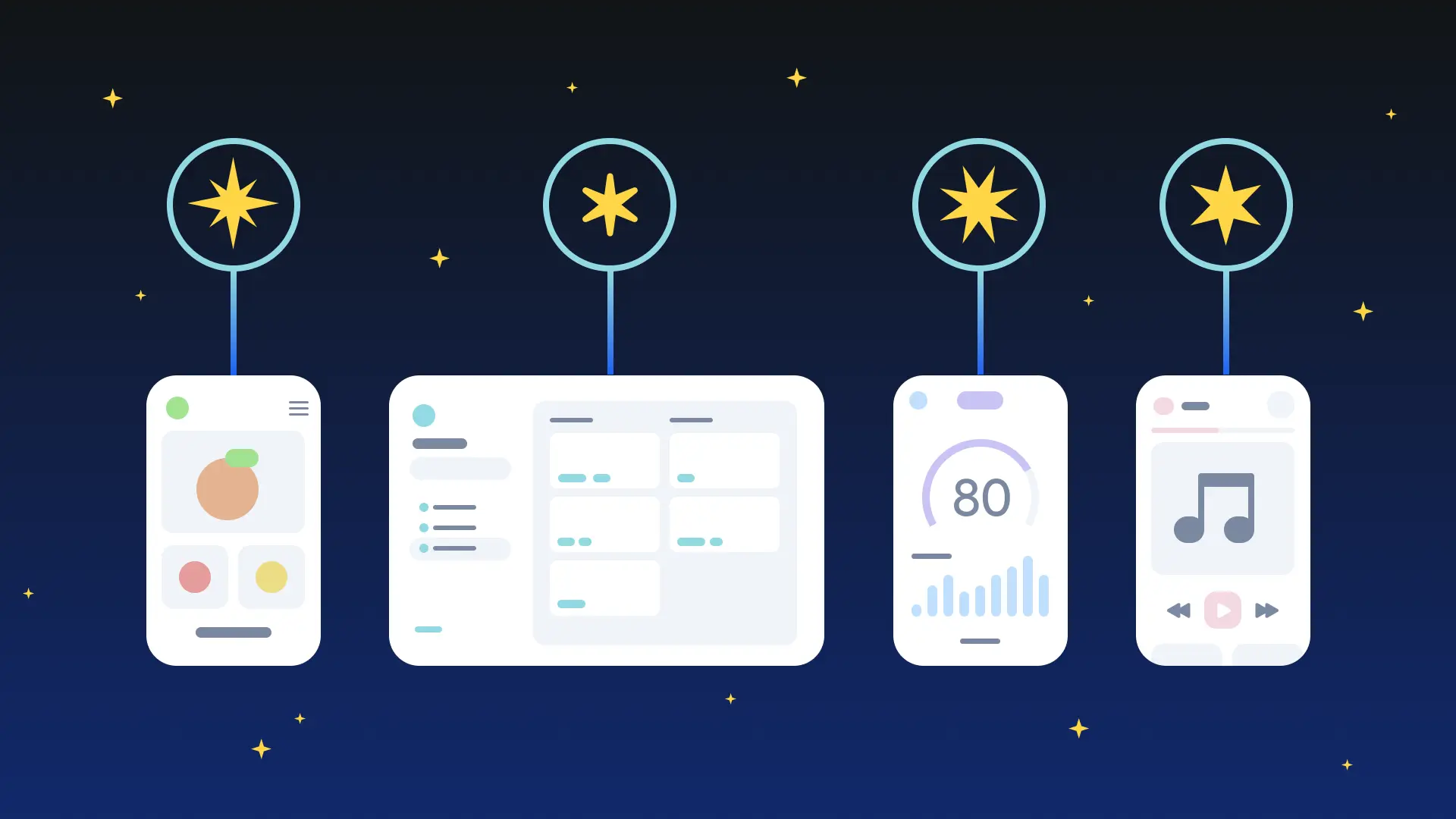
What is a North Star Metric?
The North Star Metric (NSM) isn’t just another metric. It’s the one that best captures the core value your product delivers to users. It’s not a snapshot—it’s a compass.
A strong NSM connects three key dimensions:
✅ The real value experienced by the user
✅ The product’s current strategy
✅ The long-term impact on the business
Put another way: it reflects what your product does well, what your users care about, and what your company needs to scale.
For a more technical deep dive, check out this Amplitude guide on North Star Metrics.
Why is it so important to define your North Star Metric?
When clearly defined, the North Star Metric helps you:
-
Prioritize initiatives with focus
-
Align product, growth, marketing, and data teams
-
Measure the impact of your strategy—not just operational output
And most importantly: it gives you a foundation for deciding what to do and what not to do.
What does a strong North Star Metric look like?
A good NSM should meet three key criteria:
-
User-value centered
It’s not enough for it to be easy to measure. It should represent an action tied to the user’s “aha moment.” -
Aligned with your strategy
It needs to reflect where your product is heading. Not just any metric will do. -
Predictive of future growth
It should be a leading indicator. Metrics like revenue or churn matter, but they show up too late.
Examples of North Star Metrics
-
Facebook (early days): “Users who add 7 friends in their first 10 days”
-
Mobile-first eCommerce: “Mobile orders delivered without incidents”
-
Self-serve SaaS: “Accounts with 3+ active users in the first week”
Can a company have more than one North Star Metric?
Generally, no.
A North Star Metric is a strategic decision. If you have more than one, you probably have multiple strategies—or a lack of focus.
In large organizations, there can be one NSM per business unit or product, but not within the same team.
💡 Tip: Pair your NSM with actionable inputs—metrics that track progress toward your North Star and can be directly influenced by your team.
If you’re working on defining your digital product strategy, the North Star Metric is a great place to start.
How do you choose the right North Star Metric?
It all starts with understanding what kind of “game” you’re playing:
🔹 Attention Game: Are you trying to keep users engaged and spending time in your product?
🔹Transaction Game: Is success measured by how many purchases are made?
🔹 Productivity Game: Does your product help people do something better, faster, or more easily?
Each game has its own signals. Therefore, not every metric fits every model. That’s why, rather than picking a metric that sounds good, you should choose one that truly predicts long-term impact.
Why does having a North Star Metric matter so much?
Because what you don’t measure well, you can’t optimize effectively.
Without a clear North Star Metric:
-
Teams tend to focus on what’s easiest to move, instead of what matters most.
-
As a result, the user’s value often gets lost.
-
Over time, the strategy becomes diluted.
On the other hand, a strong NSM changes your culture. It shifts the focus from output to impact. It turns data into direction.
At Minders, we help you find your North Star Metric
We partner with clients to discover, validate, and implement their North Star Metric—not as a vanity number, but as a living system that informs decisions every day.
In short, when you know where you’re going, everything else becomes easier to measure—and to achieve.
Reach out. After all, some decisions shouldn’t be made in the dark.